
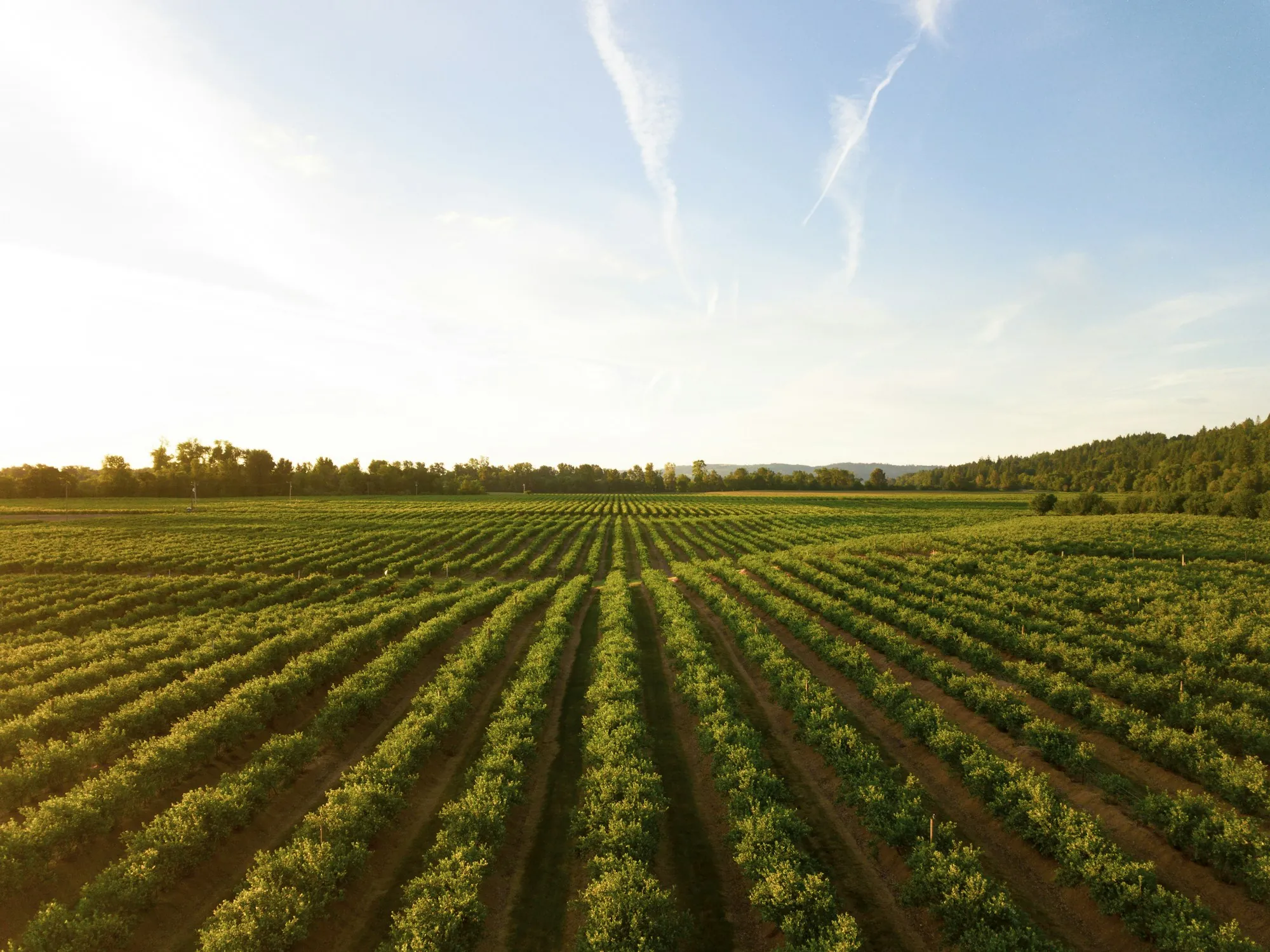
Drive the roads south and east of Arvin and the pattern is easy to see: orchards, vineyards and row crops running up toward the Tehachapi foothills. Every one of those acres depends on water that comes from somewhere specific. When you are buying farmland in California, the water rights and the wells that come with the parcel matter as much as the soil and the price per acre. A field with an uncertain supply is a very different asset from the same field with a reliable district allocation and productive wells. This guide covers the questions to answer before you make an offer on farm ground in the Arvin area.
Key takeaways
- California separates surface water rights, which can require a state permit, from groundwater use, which the state does not permit in most areas.
- Riparian rights attach to land bordering a natural water source and do not require a permit, but they cover only water that would naturally flow in the stream.
- Groundwater in the Kern County Subbasin is managed by local agencies under the Sustainable Groundwater Management Act, and the State Water Board describes the subbasin as critically overdrafted.
- Around Arvin, the Arvin GSA covers the part of the subbasin inside the Arvin-Edison Water Storage District service area.
- Well checks belong in your investigation period: records, pump tests, water quality and the condition of the equipment.
What kinds of water rights can come with California farmland?
California farmland can come with surface water rights, a supply from a water district, the ability to pump groundwater, or some combination of the three. The State Water Resources Control Board explains that riparian rights belong to land next to a natural water source, need no permit and apply only to water that would naturally flow in the stream. Appropriative rights run on “first in time, first in right” priority. Rights established before 1914 often required no formal approval, while rights created after the Water Commission Act of 1914 go through the Board’s permit process.
Groundwater is treated differently. The Board notes that California has no permit process for groundwater use in most areas and that overlying landowners can generally extract percolating groundwater without its approval, though some basins are governed by court decrees. That does not mean groundwater is unregulated; it means the rules come from local groundwater agencies rather than a state permit.
For a buyer, the practical upshot is simple. Ask the seller to identify every source of water the property uses, and ask for the documents behind each one: permits or licenses for surface water, district account records and any filings with the State Water Board.
How does district water work on land near Arvin?
District water is supply delivered by a water agency to the land within its service area, and around Arvin a major agricultural water agency is the Arvin-Edison Water Storage District. A district supply is attached to the land’s location and its standing with the district, so a buyer needs to confirm that the parcel is inside the service area and in good standing, not just that a canal runs nearby.
During due diligence, request the parcel’s district records directly or through the seller. Useful items include the history of water deliveries, any assessments or charges billed through the county tax roll, any outstanding balances and the district’s rules on how allocations work in dry years. Ask whether the parcel takes delivery through a turnout, whether the on-farm distribution system is in working order and whether any delivery agreements are personal to the seller or run with the land.
The answers affect value directly. Two parcels with the same soil can sell at very different prices if one has a dependable delivery history and the other relies only on wells.
What does SGMA mean for groundwater on a farm you buy?
The Sustainable Groundwater Management Act requires local groundwater sustainability agencies to manage each basin toward long-term balance, and that can limit how much a landowner pumps in the future. The Kern County Subbasin is under this framework. In a September 2025 State Water Board announcement, the Board described it as critically overdrafted, noted that 20 local agencies manage it and said the revised plans ramp down subsidence before 2040, with the subbasin returned to the Department of Water Resources’ oversight subject to conditions.
Around Arvin, the relevant agency is often the Arvin GSA. According to the state’s SGMA portal, the Arvin-Edison Water Storage District formed it to cover the portion of the Kern County Subbasin within the district’s service area, including areas overlapping the Arvin Community Services District and nearby districts.
When you buy, ask which agency covers the parcel and how its plan treats the land. Pumping allocations, extraction fees, metering and reporting requirements are set locally and can change as plans are updated. Request any notices the seller has received and confirm the current rules with the agency itself.
Which well checks should you make before removing contingencies?
Well checks are the physical side of water due diligence: confirming that each well exists as described, works, produces enough water and is built in a way that fits current conditions. Start with records. Drillers file well completion reports with the Department of Water Resources, and the state’s online map of those reports can help you find a well’s depth, construction details and the date it was drilled. Note that the state cautions its map is an index, so confirm details against the original report.
Then test the wells themselves. A pump test by a qualified well contractor measures flow and drawdown under load. A water quality test for the intended use, whether irrigation or a domestic well serving a farmhouse, shows what treatment may be needed. Have the pump, motor, electrical panel and any meter inspected, and ask for power bills, since energy use tells you a lot about how hard a pump works. If the static water level has been dropping, a shallow well may need deepening sooner than you expect.
How do water findings change your offer?
Water findings usually change an offer in one of three ways: the price, the terms or the decision to buy at all. A weak pump test or a well that needs work can support a price adjustment or a seller credit. Missing district records or unclear surface water documents can justify a longer investigation period while you sort them out. A parcel with no dependable supply may simply be the wrong property for your plans.
Build those possibilities into the offer from the start. Give yourself an investigation period long enough to schedule a well contractor, request district records and hear back from the groundwater agency. Our agricultural real estate page outlines what a farm purchase review typically covers, and water sits near the top of that list.
Where water due diligence on Arvin farm ground should start
The first move is to map the water before you negotiate the price. Get a list from the seller of every source the parcel uses, then confirm each one with the party that controls it: the State Water Board for surface rights, the water district for deliveries, the groundwater agency for pumping rules and a well contractor for the wells themselves. Do it inside your contingency period, because once you remove contingencies, a water problem becomes your problem. Legal questions about the strength of a specific right belong with a water law attorney.
If you are weighing a parcel near Arvin, Lamont or Weedpatch, the agricultural real estate and buyer representation pages describe how Real Estate Agent Arvin approaches farm purchases, and the homepage covers the other property types handled.